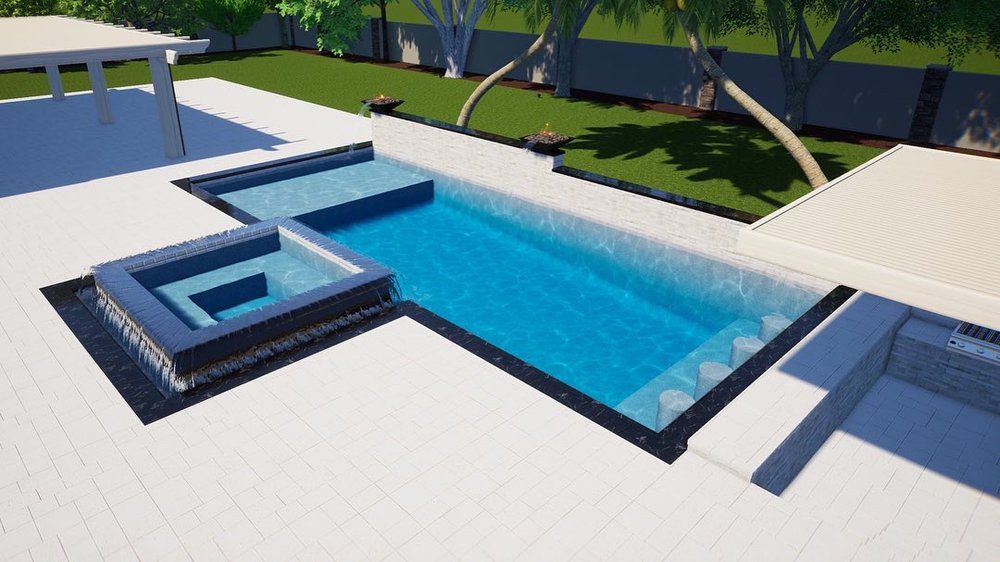
Somewhere between picking a pool shape and signing off on a final design, almost every homeowner in the Las Vegas Valley asks the same question: should the spa be part of this, or is it an extra that sounds nice but won’t get used?
A pool and spa combo homeowners actually use for years, instead of one that sits half-finished in someone’s mental plan, usually comes down to a few honest considerations rather than a gut feeling at the design table. The answer isn’t the same for every backyard, and it shouldn’t be, since it depends on how the space actually gets used, not just what looks good in a rendering.
What a Spa Actually Adds to a Pool Project
A spa isn’t just a smaller, hotter version of the pool. It’s a separate water feature with its own heater, jets, and controls, usually attached to the pool but built to run entirely on its own, on a weeknight in January when the pool itself is the last thing anyone wants to jump into. That independence is the whole point: a spa runs at a comfortable soaking temperature regardless of the season, while the pool’s temperature follows the outdoor air.
Practically, that means a spa extends how much of the year you actually use your backyard, not just how it photographs in July. Crystal Cove designs the spa’s heating and controls as part of the same system from day one, not as a feature bolted onto a finished pool afterward.
The Health and Relaxation Case for a Spa
The appeal of a spa isn’t only about aesthetics. According to Cleveland Clinic, regular hot tub use is linked to real, physician-backed benefits: reduced stress, relief from muscle aches, improved heart health, temporarily lower blood pressure, and better sleep, largely because the drop in body temperature after soaking mimics the natural cooldown that helps the body wind down for the night.
For anyone coming home after a long shift or a stressful day managing a household, twenty minutes in a spa is a genuinely different kind of unwind than the pool itself provides, and it’s available on the exact evenings a pool alone wouldn’t tempt anyone outside. That said, it isn’t for everyone: Cleveland Clinic notes hot tubs aren’t recommended during pregnancy or for people with certain heart conditions or low blood pressure, so it’s worth a quick conversation with a doctor if any of that applies before making the spa a fixture of your routine. It’s also part of why our design consultations walk through actual usage, how often, at what time of day, by whom, rather than treating the spa as a box to check on a features list.
How a Spa Changes Your Budget and Timeline
Adding a spa increases the project cost, largely because of additional plumbing, a dedicated heater, and extra equipment. Still, it rarely extends the build timeline significantly when you plan it from the start rather than adding it after the fact. The bigger budget question isn’t whether a spa costs more; it’s whether the added cost fits your plans without stretching the rest of the backyard build thin.
Cutting corners elsewhere, on decking, landscaping, or finishes, to squeeze in a spa usually shows up later as regret over the parts of the yard that got shortchanged. If the numbers are a stretch on paper, we build financing options around the full project, pool and spa together, which tends to make more sense than financing the pool alone and hoping to add a spa later.
Design Decisions That Matter Before You Commit
An attached spa that shares a wall with the pool is the most common layout and usually the most cost-efficient, since it shares equipment and plumbing runs with the pool rather than needing its own separate systems. A detached spa, set apart in its own space, offers more privacy and a distinct feel but adds cost and complexity. Sizing matters too: a spa built for two people functions very differently than one meant to seat six for evening entertaining, and placement relative to the house affects how likely it is to actually get used on a cold night versus becoming a walk across the yard nobody wants to make.
Sun and shade patterns matter as well, since a spa tucked into full afternoon sun heats up differently than one shaded by the house or existing landscaping, which affects both comfort and how hard the equipment has to work. Seeing these options modeled out in 3D before construction, rather than described on paper, is usually what turns a maybe into a confident yes or no. Crystal Cove’s pool and spa design process walks through exactly this kind of layout decision before anything gets built.
Is a Spa Actually Right for Your Backyard?
A spa tends to earn its place when the household already gravitates toward the backyard in the evenings, when the cooler months would otherwise mean stretches of an unused pool, or when entertaining is a regular part of how the space gets used. It’s a harder case to make if the pool itself already goes unused most of the year, since a spa won’t fix a backyard that isn’t part of the daily routine to begin with.
It’s also worth being realistic about maintenance: a spa is another piece of equipment to balance and service, not a bigger version of the pool’s existing upkeep. Being honest about actual habits, not aspirational ones, is the difference between a spa that gets used year-round and one that becomes an expensive afterthought, which is exactly the kind of honest conversation we’d rather have with you before construction starts than after.
See What a Pool and Spa Combo Actually Looks Like
Design descriptions only go so far. Looking through real completed pool and spa projects we’ve built, attached and detached, small and entertaining-sized, tends to clarify a preference faster than any spec sheet can, especially for anyone still picturing a generic hot tub rather than a spa built into the actual pool design.
Where to Build a Pool and Spa Combo in Las Vegas
Crystal Cove Pool & Spa designs and builds custom pools, spas, and complete backyards for homeowners throughout Summerlin, Henderson, and the greater Las Vegas Valley, typically completing projects in 2 to 3 months rather than the 6 to 8 months common elsewhere in the industry.
Holding both a pool contractor license and a separate landscape license means the pool, the spa, and the surrounding backyard are handled by one team rather than three separate contractors passing the project between them, and an in-house excavation partnership means digging can start without waiting on an outside crew.
For a pool and spa combo specifically, that coordination matters: the spa’s plumbing, equipment, and finishes need to match the pool’s from day one, not get reconciled after the fact once two different crews have already staked out their piece of the yard.
Ready to Decide if a Spa Belongs in Your Backyard?
If you’re still weighing whether a spa is worth adding, the fastest way to get a real answer is to have our team lay it out for your actual yard, not a generic example. Get a free quote and see what a pool and spa combo would really look like and cost for your backyard.